How it all began
Jan Santman
Early in the 1980s Bert got the chance to work with Jan Santman. Jan, who learnt the trade with Max Möller in Amsterdam, had during the 1970s set up as an independent violin maker in Beilen in Drenthe, close to Vries, the village where Bert was born. He encouraged Bert to widen his horizons and to search for a workplace abroad, particularly in France. There, he said, you will learn to combine craftsmanship with speed of production. Even though Bert didn’t spend all that much time with Jan, Jan’s influence on his career was considerable.

Jean-Jacques Pagès
Bert found just such a workplace with Jean-Jacques Pagès. (For many years Jean-Jacques himself had worked for Etienne Vatelot in Paris, before starting his own workshop in Mirecourt). Between early 1986 and the end of 1988 Bert immersed himself in the French tradition of violin making that is so famous throughout the world. After three years it was once again time to move on.
Reinhard Ossenbrunner
Bert’s preference for Early Music and historical string instruments led him to Reinhard Ossenbrunner. In 1989 Bert was given the chance to become his apprentice. The years that followed proved exceptionally fruitful ones during which he definitively fell in love with Early Music and everything associated with it. Above all the Viol family became his great passion. In less than three years Reinhardt prepared him, firstly in Altwistedt (near Bremen) and later in Cologne, to start his own business as an independent viol maker.

Back in Vries
Bert opened the doors of his workshop in 1991. Since then many instruments have found their way into the hands of enthusiastic musicians, both amateur and professional.

Our working method
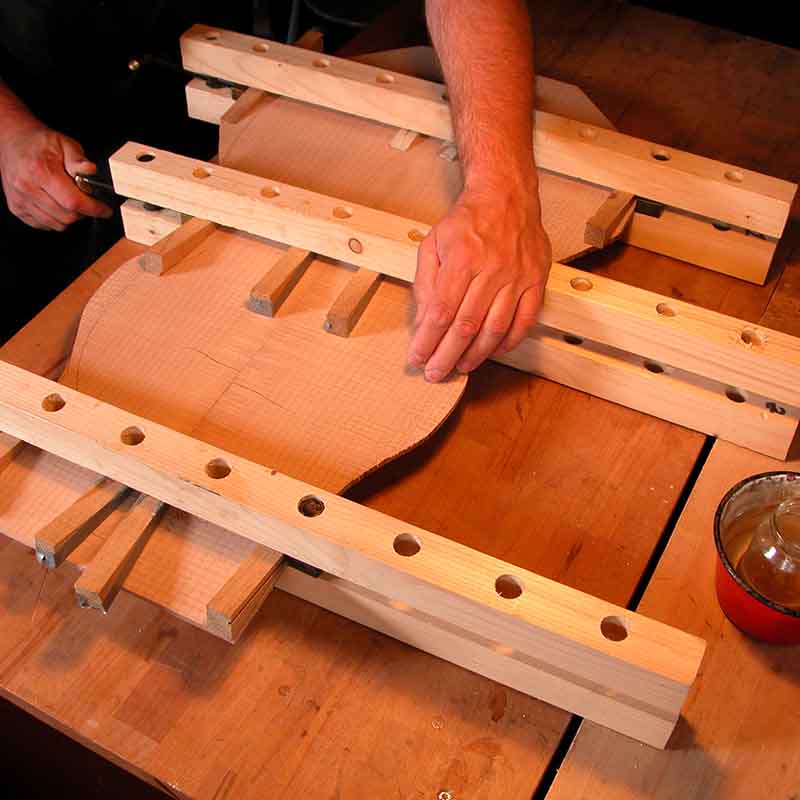
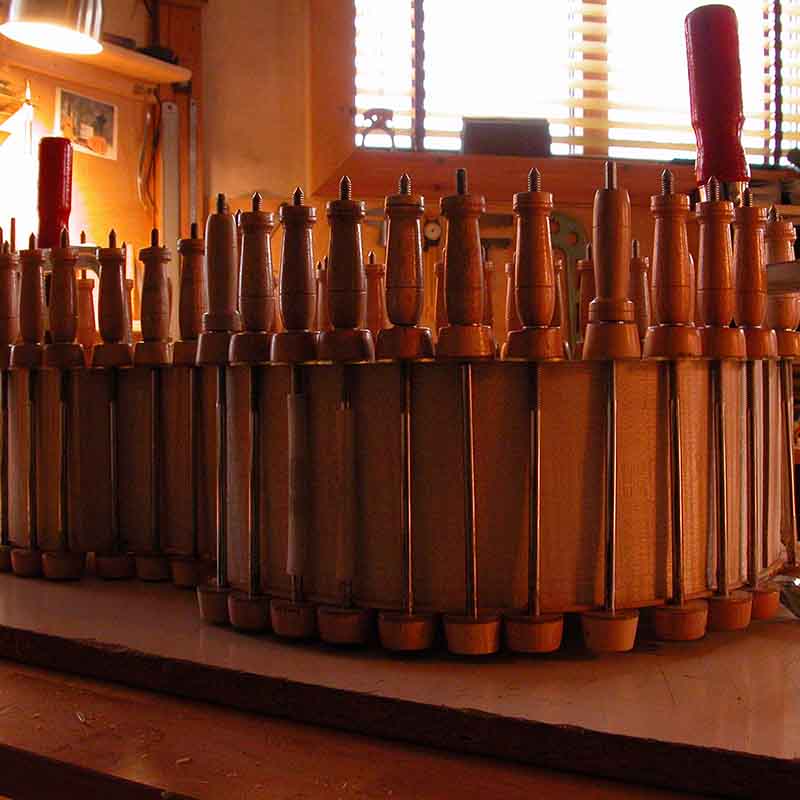
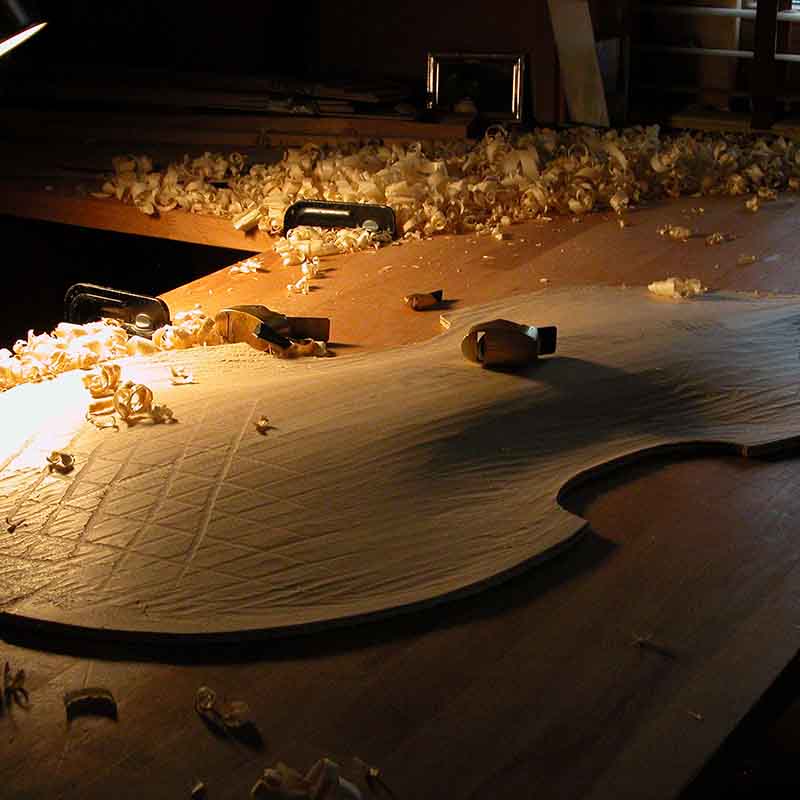
By studying and measuring many instruments in museums and private collections, Bert has been able to develop his own style as a maker. This enables him, within the given historical parameters, to translate your wishes concerning timbre and playability into an instrument tailored to the customer.
This will of course be in close consultation with Bert, whose own ideas and preferences play an important role within the co-operation between maker and customer.
The result will be an instrument that respects both the individual wishes of the player and the maker’s vision.